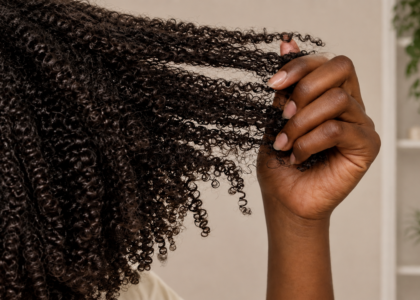


Effortless Natural is a Detroit-based, Black-owned beauty company founded by a Michigan State University Alumni, and an African systems entrepreneur.
Its origins date back to 12 years ago, when there was a sustained effort to understand textured hair: how it responds to moisture and protein, why certain protective styles work better than others, which tools reduce unnecessary breakage, and how separate products can be brought together into a routine that makes sense. Effortless Natural grew from that accumulated knowledge. The company exists because its founder spent years building a system for herself before recognising that the system could be useful to other women.
In 2013, while studying Economics and Demography at the University of Malawi, Tech Entrepreneur Nthanda Manduwi became absorbed in the science and practice of caring for her hair.
The natural-hair internet of that period felt markedly different from the commercial beauty landscape that would follow.
Women documented their wash days in detail, compared regimens, photographed length checks, debated ingredients, recorded setbacks, and shared techniques with a seriousness that came from having few dependable sources of information elsewhere.
Blogs such as Naptural85 and Just Grow Already formed part of a distributed knowledge community in which Black women studied their own hair and taught one another what they learned.
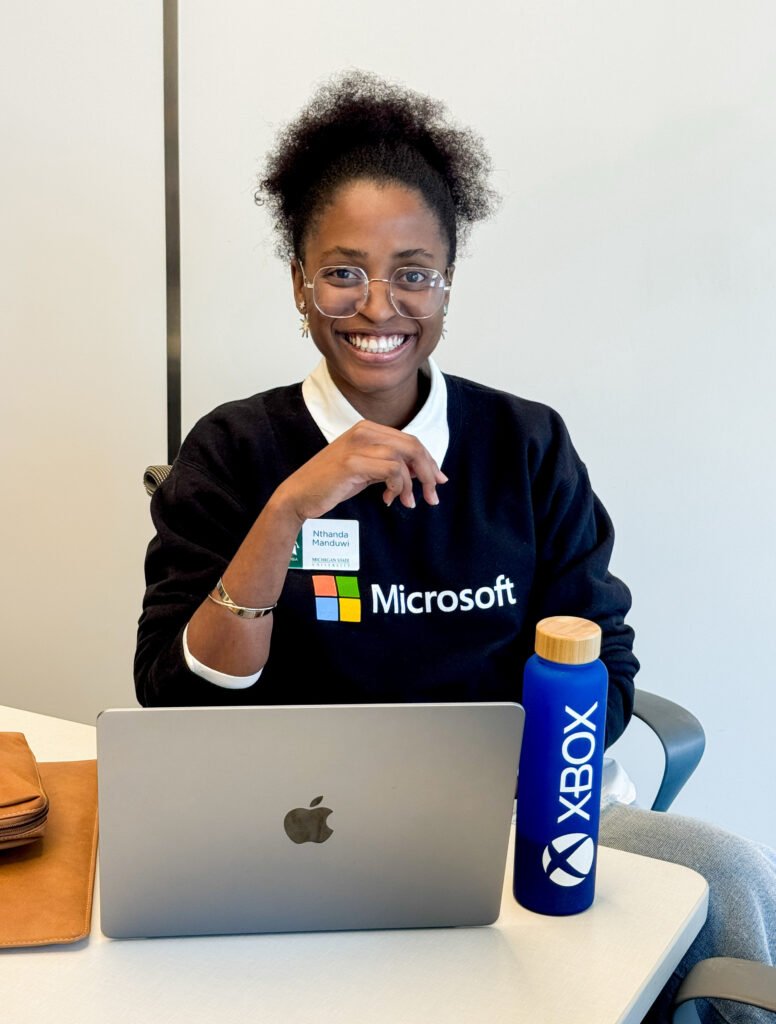
Nthanda created her own place within that community. She called it My Hair Obsession, a small Blogger site that remains online in much the same form in which it was published in 2014. Its posts contain wash-day records, protective-styling notes, product combinations, length photographs, observations about damaged ends, experiments with texlaxed hair, and candid accounts of what was or was not working.
That knowledge soon became useful beyond her own routine. Friends asked her to help with their hair, and she began braiding classmates and advising women who wanted to move away from conventional chemical relaxing. She learned how differently similar products could behave across individual heads of hair. She also saw the distance between beauty marketing and the practical questions women were trying to answer. A product could promise softness, growth or repair, but the result depended on what came before it, what followed it, how frequently it was used and whether it belonged in the person’s wider routine.
Beauty became one of Nthanda’s earliest forms of entrepreneurship. During her undergraduate years, she identified an opportunity to sell Sinful Colors nail polish. She later extended her work into hair services and, in her final year at the University of Malawi, established a small salon on campus. The operation was modest, but the underlying model was already broader than a single transaction. Women came for a service, asked questions, compared products, shared recommendations and returned with friends. Hair care functioned as commerce, education and community at once.
After university, Nthanda moved to the city intending to develop a larger beauty and wellness business. Her career moved in another direction. The same interest in communication that had led her to document her hair expanded into writing about Malawi, tourism, culture and digital media. Blogging became a way to make information more accessible and to present African places and experiences through the perspectives of the people who knew them. As others began asking how to build their own platforms, she started teaching digital skills.
That work developed into Digital Skills for Africa, an initiative designed to help young people use technology to create, communicate and participate in the digital economy. While building it, she pursued a Master of Science in Entrepreneurship at the Malawi University of Science and Technology, with a focus on information management systems. The formal study gave language and structure to questions she had already been asking in practice: why people adopt certain tools, why useful systems fail to reach intended users, and how technology can be designed around actual behaviour rather than assumed behaviour.
Her work subsequently moved through government, international development and large technology institutions, including the Government of Malawi, the World Bank, the United Nations and Microsoft. These experiences taught Nthanda to examine how information moves, how incentives shape behaviour, how fragmented programmes produce fragmented outcomes, and why an intervention that appears effective in isolation may fail when placed inside a poorly designed system.
Across those institutions, she repeatedly encountered versions of the same problem. People were expected to navigate services assembled by different providers, built under different assumptions and rarely designed to work together. The burden of integration fell on the user. The user had to locate the information, interpret competing claims, identify the right sequence and absorb the cost of making the wrong choice. That pattern would later help her understand something she had experienced for years in beauty: Black women were not lacking products. They were being asked to assemble coherent systems from an overwhelming number of disconnected ones.
After close to a decade in international development, Nthanda returned more deliberately to entrepreneurship. She undertook an MBA at the Michigan State University, with a dual concentration in marketing management and business analytics, and developed Q2 Systems, a technology company working across agriculture, automation and robotics.
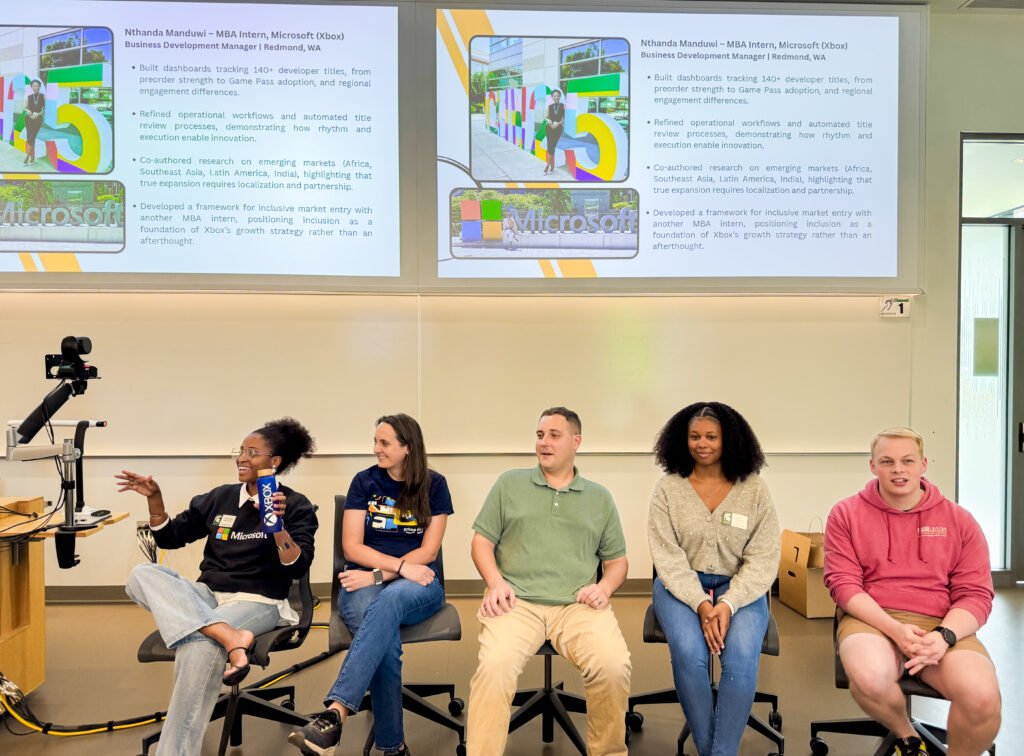
Nthanda in the second year of her MBA at the Michigan State University’s Broad College of Business
In 2026, after graduating from Michigan State University, Nthanda was selected as one of eight participants in the Detroit Tech Residency and moved to Detroit. She arrived primarily to continue developing her work in technology. Detroit, however, brought her into closer contact with another part of her own history.
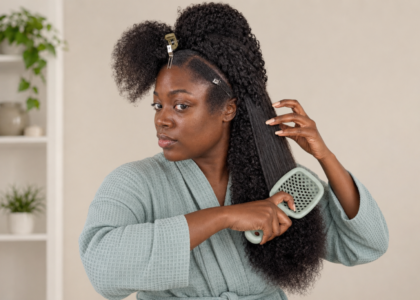
Nthanda often alternated between wearing her natural hair and wearing half-wigs selected and styled to blend closely with it. She had spent years learning how to choose textures, shapes and densities that complemented her own hair rather than disguising it. The result prompted a recurring set of questions from Black women and men around her.
“Is this your real hair?”
“Where did you buy the wig?”
“What products did you use underneath it?”
“How do you care for your natural hair?”
“How do you blend your hair?”
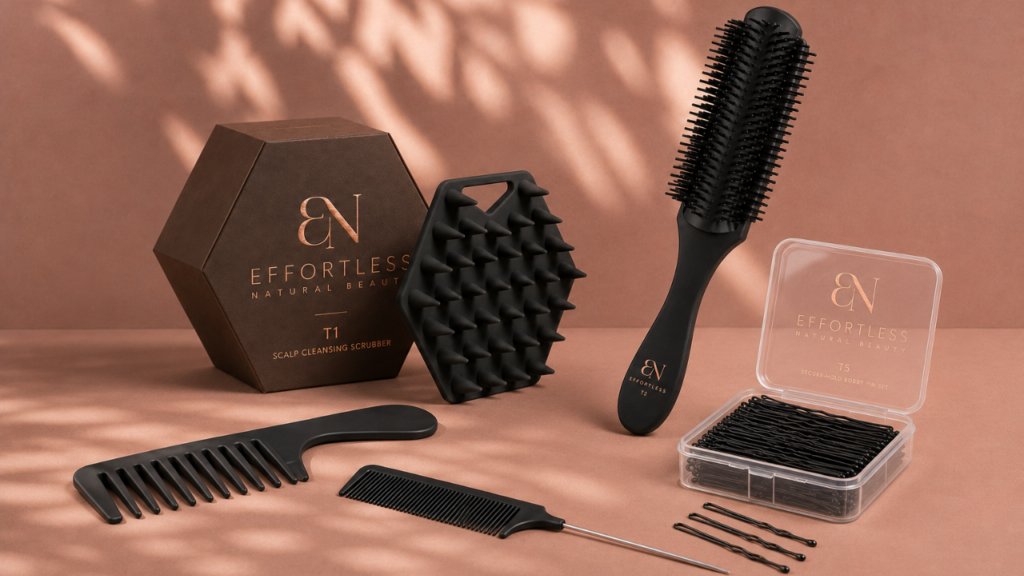
The questions were familiar, but answering them had become strangely inefficient. A useful response required several links from different retailers. The hair came from one source. The combs came from another. Moisture products, protein treatments, oils, satin accessories and storage solutions came from still more. Some recommendations required lengthy explanations because the products only made sense when used in a particular order or under particular conditions. Sending a product link without the accompanying knowledge often felt incomplete.
The inconvenience revealed a larger gap. Nthanda had spent more than ten years building a personal hair-care ecosystem, yet there was no single place she could confidently send someone who wanted to understand the whole routine. The market contained thousands of individual products and an immense volume of content. What remained difficult to find was considered curation: a platform that treated hair pieces, hair health, tools, maintenance, protective styling and education as parts of the same experience.
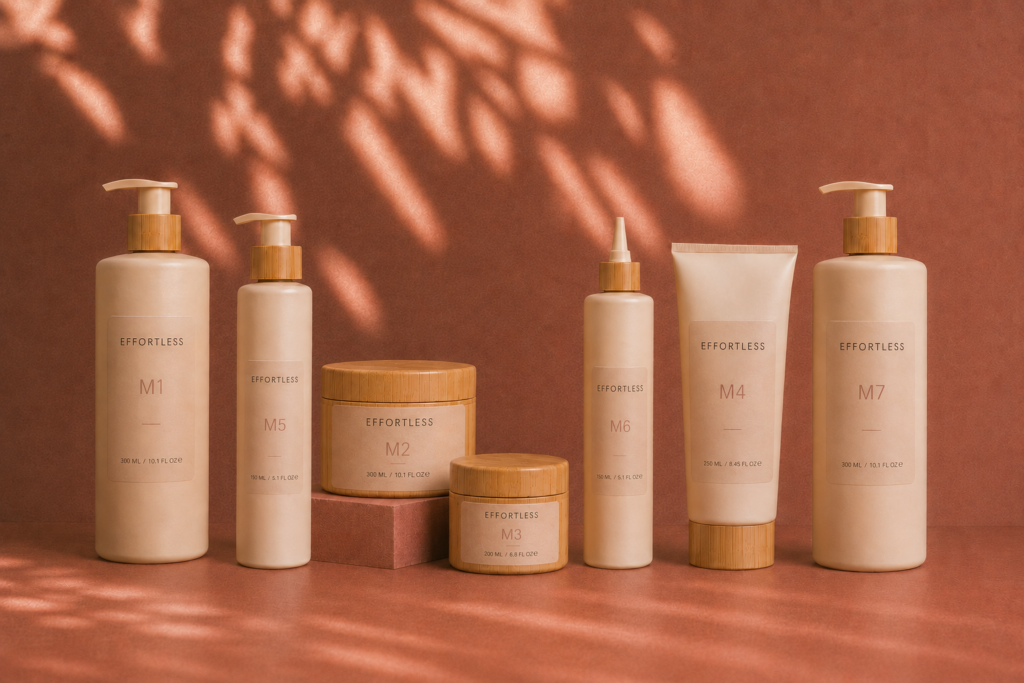
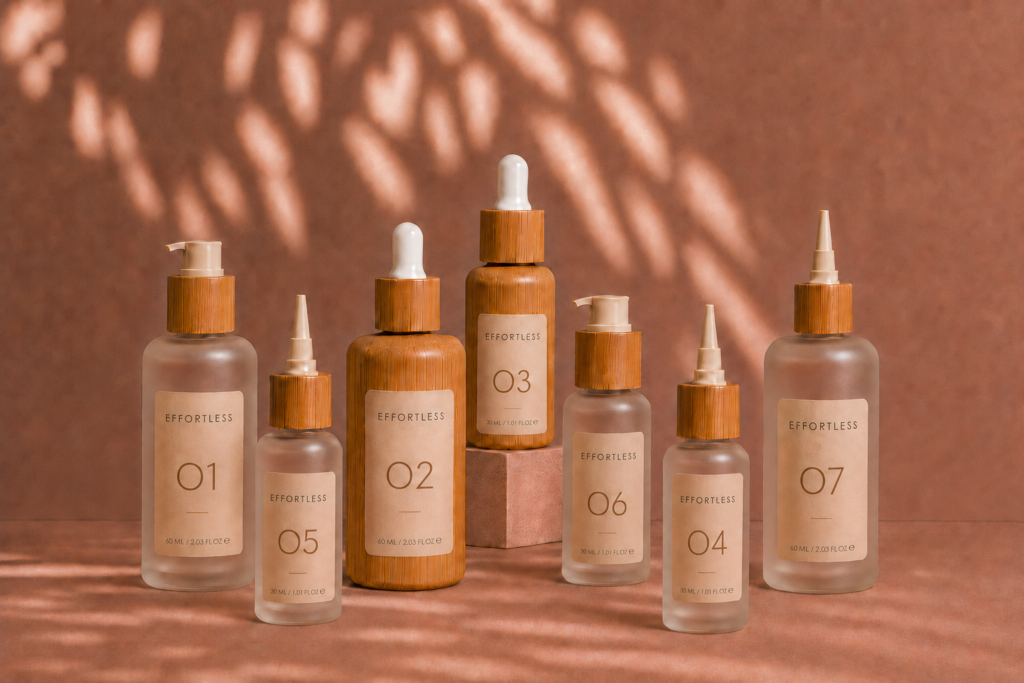
Effortless Natural was developed in response to that gap. Its founding question was simple: what would it mean for everything she genuinely recommended to live in one place? The answer could not be another crowded beauty store filled with products that happened to share a category. It required a more deliberate structure, one in which each item had a role and each collection helped a customer understand how the pieces could work together.
This is why the company’s central proposition is not that one product can transform textured hair. Textured hair rarely conforms to such claims. Healthy hair depends on balance: moisture without excessive softness, protein without brittleness, styling without sustained tension, cleansing without unnecessary stripping, and protection without neglect. Hair pieces must work with the wearer’s natural texture, lifestyle and desired level of maintenance. Combs and brushes must suit the task for which they are selected. Satin accessories, storage, oils and treatments influence how well a style lasts and how the hair underneath it is preserved.
Effortless Natural therefore approaches beauty as an ecosystem. Moisture, protein, protective styling, accessories, tools, hair pieces, storage, education, routine and community are not separate categories assembled for convenience. They are interdependent parts of textured-hair care. The company’s role is to make those relationships easier to understand and easier to navigate.
The ambition extends beyond selling wigs or assembling product bundles. Effortless Natural is intended to recover something valuable from the natural-hair communities of the early 2010s: the expectation that Black women could be students and authorities of their own hair. Those communities were imperfect, but they created a shared body of practical knowledge. Women documented the full process, including mistakes. They discussed why a technique worked, not merely what it looked like. Product discovery was connected to education, and education was strengthened by collective experience.
As beauty content became more commercial, much of that depth was compressed into shorter demonstrations, affiliate links and rapid transformations. The visibility of textured hair increased, but the knowledge surrounding it often became harder to organise. Wig culture expanded dramatically, yet conversations about the health of the hair underneath did not always expand with it. Hair care and wigging were frequently treated as separate markets even though many Black women move between them as part of one continuous routine.
Effortless Natural is designed around that continuity. A woman should not have to choose between enjoying a half-wig and caring seriously for her natural hair. Protective styling should protect. Convenience should not require abandoning knowledge. A polished appearance and a healthy routine should be able to coexist. The company’s collections are intended to support that relationship, not to prescribe a single standard for how Black women should wear their hair.
Effortless Natural is owned by a Black African woman who has lived with, studied and cared for textured hair across different climates, countries and stages of life. She understands the cultural significance of Black hair, but she also understands its ordinary practical demands: limited time, inconsistent products, rushed mornings, wash days that take longer than expected, and the need for styles that can accommodate professional life without making hair management a second occupation.
Her position as a technology founder also shapes the company. Nthanda runs a robotics company and works on complex systems in agriculture and infrastructure. She is familiar with demanding schedules and with the tension between wanting to care well for one’s hair and not wanting hair care to consume every available hour. The word “effortless” reflects a practical ambition: that the system surrounding the customer should carry more of the burden.
From August 2026 through May 2027, Nthanda will participate in the Apple Developer Academy in Detroit, where Effortless Natural will be one of the ventures she develops.
The company is the next expression of a practice that has been developing for years. It brings together the hair pieces Nthanda wears, the tools she depends on, the routines she has refined and the knowledge she once shared through a small green blog from Malawi. Effortless Natural exists to give that system a permanent home.
Want to connect with Nthanda? Reach out to her via email: nthanda@effortlessnatural.com, and our team will be in touch.
Corporate Social Responsibility
Effortless Natural is part of a wider ecosystem of institutions founded by Nthanda. Alongside her commercial ventures, she established the Ntha Foundation and Kwathu Kollective, organisations dedicated to expanding access to education, digital skills, entrepreneurship and creative opportunity for young people across Africa. Together, their programmes have reached millions of learners, creators and aspiring entrepreneurs over the past decade.
Every purchase made through Effortless Natural supports and strengthens an ecosystem of Black-owned institutions committed to education, innovation and entrepreneurship, helping create opportunities for future generations.